
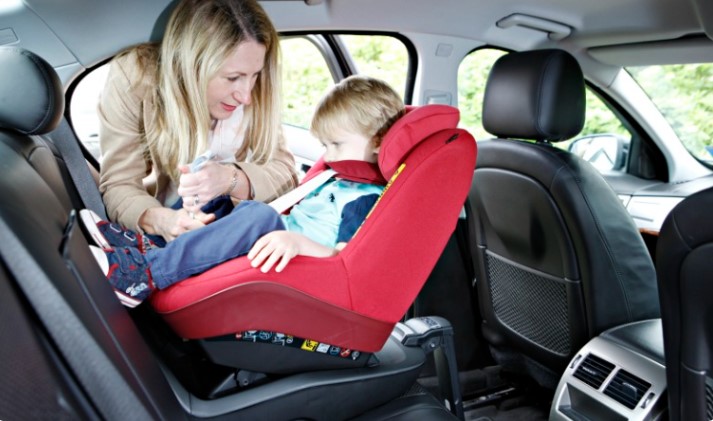
Keeping tamariki safe in the car is one of the most important responsibilities for caregivers. Unfortunately, car accidents remain a leading cause of injury for young children. In Aotearoa New Zealand, children under seven must use a car seat that fits their age, size, and development. Following best practices for car seat safety helps protect a child’s head, neck, and spine during travel. Car seats generally fall into three categories: rear-facing, forward-facing, and booster seats. Understanding the differences between these types ensures children are safely secured during every journey.
Rear-Facing Car Seats
For infants and toddlers, rear-facing seats provide the highest level of protection. These seats are positioned in the back of the car, facing the rear window, and support a child’s head, neck, and spine, which are particularly vulnerable in the first years of life.
Children should remain in a rear-facing seat until they exceed the weight or height limits specified by the manufacturer, often until they are at least two years old and ideally up to three. Factors such as seat orientation, harness adjustments, and how the seat is secured can all affect safety. Caregivers can consider advice on choosing the safest seat placement in a vehicle to ensure the seat is positioned correctly in the back and installed securely.
Forward-Facing Car Seats
Once a child outgrows a rear-facing seat, a forward-facing seat is typically the next stage. These seats are generally used from toddler age until around five or six years, depending on the seat’s weight and height limits. Children should stay in their current seat until they exceed these specifications, rather than switching based solely on age.
Forward-facing seats provide additional points of contact, which help distribute collision forces more evenly and offer greater support for the head and spine. Correctly fitting a forward-facing seat involves adjusting the harness, checking the seat angle, and ensuring it is securely installed, with practical guidance on managing car seat transitions for toddlers.
Booster Seats
A booster seat raises a child so that the seatbelt fits correctly across the shoulders and lap. This positioning ensures the belt does not rest on the stomach or neck, which could cause injury in a crash. Booster seats are safest when placed in the back seat.
Some booster seats can also be used with a child safety harness, which provides additional contact points to disperse forces more effectively. This makes booster seats safer than using a regular adult seatbelt alone.
Transitioning to a Regular Seatbelt
Children can legally move to a standard seatbelt after age seven, but many remain in booster seats until about 12 years old. Before the transition, children should be at least 148 cm tall and able to pass the 5-point test, which ensures the seatbelt sits correctly:
- The child can sit fully back against the seat.
- Legs bend comfortably over the edge of the seat.
- The shoulder belt crosses the shoulder, not the neck.
- The lap belt sits low on the thighs.
- The child can remain seated in this position for the entire trip.
Ensuring Compliance and Safety Standards
Before buying a car seat, it is important to ensure it meets recognised safety standards in New Zealand. Approved seats generally comply with one of the following:
- Australian/New Zealand standard AS/NZS1754, indicated by the Australian Tick Mark.
- European standard ECE R44.04, shown with a circle containing an “E” and a country number.
- US standard FMVSS213, which includes an “S” marking for use in New Zealand.
These standards confirm that a car seat has been tested for safety and is suitable for use in vehicles.
Conclusion
Choosing the correct car seat for a child is essential for safe travel. Understanding the differences between rear-facing, forward-facing, and booster seats, and ensuring the seat meets recognised safety standards, helps reduce the risk of injury during every journey.
