
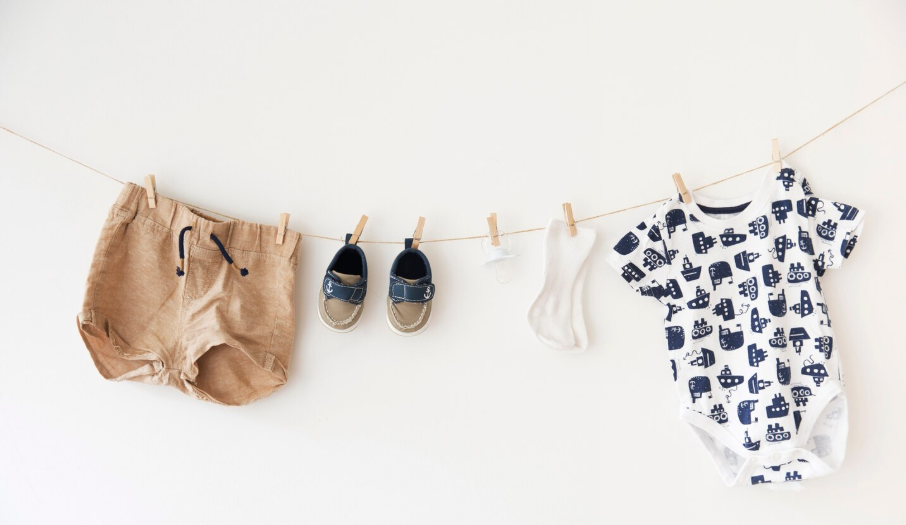
You’ve got a registry open in one tab and a size chart in the other. Somewhere in between, the words stop making sense. Bodysuit. Footie. Coverall. Romper. Sleeper.
Most people lump all of it together as baby onesies. That’s fine until you’re actually buying, and you realize one listing is a short-sleeve top with snaps at the bottom and the next is a full-length sleeper with feet. They do very different jobs.
“Baby onesies” is the everyday name for all of them. A bodysuit is a top that closes between the legs. A footie covers your baby from neck to toes, feet included. A romper is a one-piece outfit made for daytime. Know those three (plus coveralls and gowns) and shopping gets a lot easier.
What do people mean by “baby onesies”?
It’s a catch-all. Parents use “baby onesies” for pretty much any one-piece baby outfit, from a basic bodysuit to a zip-up sleeper.
The word itself is a Gerber trademark, which is why most brands skip it and use more specific names. Those names are worth learning. Each one solves a different problem.
What is a baby bodysuit?
A bodysuit is the basic building block. Short or long sleeves, no legs, and it closes between the legs. Think of it as a baby T-shirt that can’t ride up.
It works on its own on warm days. When it’s cold, it’s the base layer under pants, overalls or a sleeper.
The catch is the closures. Most bodysuits have three snaps at the bottom, and you’ll undo them at nearly every diaper change.
What is a baby footie?
A footie (you’ll also see “footed sleeper”) covers your baby from neck to toes. Long sleeves, long legs, feet attached. No socks to lose. No pants to tug up.
It’s what most babies live in for the first few months, day and night. It’s also the outfit you’ll be changing in the dark.
So closures matter here more than anywhere. A footie with a long row of snaps down one leg takes a while to line up when you’re half asleep and your baby’s kicking like they’re in training for something.
What’s a coverall?
A coverall has the same full-length shape as a footie. Convertible styles let you cover the toes on cold nights and leave them out when it’s warmer.
They’re handy for babies who run long, since the leg length lasts a little longer. Magnetic Me makes convertible coveralls alongside its footies, with the same magnetic closures.
What about gowns and take-me-home sets?
A gown is a long, loose sleeper with an open or elastic bottom. No legs to wrangle, so night changes are quick. Lots of parents use them for the first few weeks, then move to footies once their baby kicks more.
A take-me-home set is a coordinated outfit for leaving the hospital, often with a matching hat. It’s a sweet extra. One is plenty.
Magnetic Me sells both alongside its footies, so you can keep the same easy closures from the very first outfit.
What’s a romper?
A romper is daywear. It’s still one piece, but it’s cut to be seen: shorter legs, a collar, a flutter sleeve, a fun print. Think park and brunch, not crib.
Rompers make more sense once your baby’s awake and out of the house more. Plenty of romper ranges start at 0-3M rather than newborn sizes.
Which baby onesies does a newborn need most?
For the first three months, two kinds of baby onesies do almost all the work: footies and bodysuits. Footies cover sleep and lazy days at home. Bodysuits handle layering and warm weather.
Rompers, dresses and two-piece sets are lovely extras. They’re just not where your first dollars need to go.
And buy more footies than you think you’ll need. Between spit-up, blowouts and the odd mystery stain, a newborn can get through three outfits before lunch.
Snaps, zippers or magnets: which closure is easiest on baby onesies?
All baby onesies have to open somehow, and you’ll open them several times a day for months.
Snaps are fiddly. Line them up one off and you only find out at the bottom, with a snap left over. Zippers are faster, but they can snag, and you still need a second hand to hold the fabric steady while your baby wriggles.
Magnetic closures are the newer option. The two sides find each other and click closed. You can do it with one hand, which matters when the other one’s holding a bottle, a phone flashlight, or a very unimpressed baby.
| Closure | How it works | One-handed? | What to watch for |
| Snaps | Studs pressed together, often down the leg | Rarely | Mismatched rows at night |
| Zipper | Zips up from the ankle or crotch | Sometimes | Snags, and you’ll need a hand to hold the fabric |
| Magnets | Magnets sewn into the front click together | Yes | Dry on low heat to protect the magnets |
Why do so many parents switch to magnetic footies?
Picture a 3am diaper change: dark room, groggy parent, baby who’s only just asleep. You open the front, change the diaper, and close it back up without counting a single snap.
Magnetic Me was built around that moment. Footies were the brand’s first-ever style, and they’re still its best seller. Its range of magnetic baby onesies, which the brand calls footies, had 160 styles listed in October 2026, in sizes from preemie up to 18-24 months (Source: magneticme.com, October 2026).
The magnets are sewn into the garment using what the brand calls SewSafe™, so they sit inside the fabric rather than on top of it.
What fabric is best for baby footies?
Fabric decides how warm a footie feels, how it moves, and how it holds up in the wash. Here’s how the main options compare in Magnetic Me’s footie range (Source: magneticme.com, October 2026).
| Fabric | What it feels like | Best for | Price from |
| Organic Cotton | Soft, simple, classic | Everyday wear in milder weather | $36 |
| Modal | Smooth and stretchy | Year-round wear | $40 |
| Waffle | Textured, with a little more body | Cooler days | $42 |
| RightFit™ | A loose fit cut | Parents who prefer a relaxed fit | $44 |
| Velour | Plush and cozy | Cold months | $46 |
If you’re only buying a few, match the fabric to the season your baby arrives in. You can always add more once you know what your baby likes.
How should a baby footie fit?
Snug at the shoulders, with a little room at the toes. If your baby’s feet press against the end, or the body pulls tight when they stretch out, it’s time to size up.
Babies grow in length faster than you’d expect, so go by height and weight on the size chart, not the age on the label. Magnetic Me publishes a sizing guide on its site, and it’s worth a look before you buy a stack in one size.
Do loose baby pajamas meet safety rules?
They can. The US Consumer Product Safety Commission (CPSC) requires children’s sleepwear in sizes above 9 months to be either flame resistant or snug-fitting. Sleepwear sized 9 months and under is exempt.
That’s why pajamas suddenly fit like leggings once your baby hits toddler sizes (ever notice?).
Magnetic Me’s RightFit™ line is its loose fit nightwear. If a relaxed fit matters to you, check the size range and product details on any loose sleeper before you buy, so you know how it meets the rule.
Can you layer baby onesies, like a bodysuit under a footie?
Yes, and on cold nights it’s a nice trick. The American Academy of Pediatrics (AAP) suggests dressing your baby in no more than one layer more than you’d wear to be comfortable in the same room.
So if you’re cozy in a T-shirt, a footie on its own is plenty. Skip hats and loose blankets for sleep, since overheating is the thing to avoid.
What’s the catch with magnetic footies?
They’re not made for a hot dryer. Wash on cold and dry for 30 minutes on low heat. High heat isn’t great for the fabric or the magnets, so low and slow is the way to go.
They also cost more than a multipack of basic snap bodysuits. Most parents mix and match: a stack of simple bodysuits for layering, plus a handful of magnetic footies for nights and the fastest changes.
And if your child has an implanted medical device, ask your pediatrician before using any magnetic clothing.
How do you build a small, useful stash of baby onesies?
Start with sizes NB and 0-3M, since newborn sizing doesn’t last long. If your baby arrives early, preemie sizes exist too.
Pick fabrics for the season. For a fall or winter baby, waffle and velour are worth it. For summer, organic cotton or modal keeps things lighter.
Then add bodysuits as your layering backup. Leave rompers for a few months in, when your baby’s more awake and you’re out of the house more.
When do kids stop wearing footies?
There’s no set age. Magnetic Me’s baby footies run up to 18-24 months, and plenty of toddlers stay in them that long, especially through winter.
Once your little one’s walking a lot, a two-piece pajama set often works better. It’s easier for potty training too, which is a whole other adventure.
At a glance
| At a glance | Details |
| Who this is for | Parents building a newborn wardrobe who want fewer, better one-piece outfits |
| The problem | Snaps and zippers slow down diaper changes, especially at night |
| What it does | Magnetic Me footies close with sewn-in magnets, so you can dress your baby one-handed |
| Price | From $36 (organic cotton) to $46 (velour) (Source: magneticme.com, October 2026) |
| Proof | Footies are the brand’s first-ever and best-selling style, with 160 styles listed (Source: magneticme.com, October 2026) |
| How to start | Pick two or three footies in NB or 0-3M in a fabric that suits the season, and pair them with simple bodysuits for layering |
FAQ
What’s the difference between baby onesies, bodysuits and footies?
Most people call both of them baby onesies. A bodysuit is a top that closes between the legs, with no pant legs. A footie covers your baby from neck to toes, feet included. Bodysuits are for layering and warm days. Footies are for sleep and cozy days at home.
How many baby onesies does a newborn need?
Plan on seven to ten for the first few months. That covers a full week plus the inevitable blowouts, without washing every single day.
Are magnetic baby clothes safe?
Magnetic Me sews its magnets into the garment using what it calls SewSafe™, so they sit inside the fabric. If your child has an implanted medical device, check with your pediatrician before using any magnetic clothing.
Can babies sleep in footies?
Yes. Footies are made for sleep. The AAP suggests dressing your baby in no more than one layer more than you’d wear in the same room, with no loose blankets in the crib.
How do you wash magnetic footies?
Wash on cold and dry for 30 minutes on low heat. High heat isn’t great for the fabric or the magnets, so low and slow is the way to go.
When do babies stop wearing footies?
There’s no set age. Magnetic Me’s baby footies go up to 18-24 months, and many toddlers wear them through their second winter before switching to two-piece pajamas.